Episodes
Compressed readings built from source video and transcript, designed to be read in minutes while preserving a link back to the source.

The Tree, The Guide, And The Chosen Fire
A source-grounded reading of a long Dante seminar that starts with a student dreaming of a tree across water and ends by redefining Purgatory as democratic hope, free will, dangerous guidance, prayer for the dead, soul-shaped fields, and fire that hardens love instead of merely punishing it.
Dante #11: Purgatory Cantos 15-25

Macbeth's Deed And Dante's Hope
A source-grounded reading of a five-hour hybrid workshop that begins with Macbeth and ends by turning Purgatory, free will, tragedy, envy, and generosity into one model of human transformation.
Dante #10: Purgatory Cantos 5-14

Fraud, Faction, and the Imagination That Manufactures Hell
A source-grounded reading of Jiang's central claim: late Inferno is where private vice hardens into social design. Pride becomes faction, false guidance becomes meritocracy and fraud, alchemy becomes AI, and the deepest falsifiers do not just lie, they hijack imagination itself.
Dante #8: Hell Cantos 20-32
Purgatory Begins By Washing Virgil Off
Jiang turns late Inferno and early Purgatorio into a struggle over imagination itself. Ulysses and Virgil become false counselors, treachery freezes the universe by destroying trust, Dante starts to behave like a force that can inhabit the reader, and Purgatory finally appears as agency, curiosity, mercy, and the long work of unlearning a bad guide.
Dante #9: Hell Cantos 32-34, Purgatory Cantos 1-4

Hell Begins When Hope Collapses Into Competition And Fraud
Dante's Hell is not just a ladder of sins in this lecture. It is a map of what happens when faith, hope, and love collapse into fantasy, meritocratic rivalry, elite self-enclosure, propaganda, and fraud. Lust becomes a lack of will. Pity becomes a wound that forces reality. Meritocracy becomes a machine that makes friends into enemies. Fraud becomes the deepest modern atmosphere because it destroys trust, narrows imagination, and leaves a civilization unable to tell truth from manipulation.
Dante #7: Hell Cantos 10-19
Dido, Reflective Hell, and Virgil's Embarrassment
A source-grounded reading of the seminar's central move: Inferno is not only a theater of punishments but a machine for moral reflection, and Virgil's authority keeps showing the limits that Dante will eventually have to outgrow.
Dante Livestream #6 (Sunday, June 21 10AM)

Question Peter, Leave Beatrice, Defeat Virgil
A source-grounded reading of the lecture's central claim: Dante's Heaven is not the end of questioning but the place where imagination, love, and freedom turn against dead authority, dead fear, and finally Virgil himself.
Dante Livestream #5 (Saturday, June 20 10AM)

Faith Makes Truth Real And Hope Risks Exile
The late cantos become Jiang's sharpest Dante claim so far: faith is not obedience but imagination that helps make truth real, hope is the arrogant wager that exile and persecution can still bear fruit, and human imperfection is finally worth more than angelic obedience.
Dante Livestream #4 (Thursday, June 18 10AM)

Dante Against Obedience
The seminar begins with line-by-line questions and expands into a larger claim: Dante matters because poetry trains imagination, vows turn hope into action, and faith, hope, and love stop meaning obedience and start meaning creative participation in the world.
Dante Livestream #3 (Wednesday, June 17 10AM)

Why Paradise Needs Human Imagination
Paradise first appears as receptivity rather than rank, then the lecture widens into vows, memory, resurrection, original sin, and Jiang's culminating wager that God created humanity because perfection alone cannot imagine.
Dante Livestream #2 (Tuesday, June 16 10AM)

Paradise As A School For Imagination And Will
A source-grounded reading of the first Dante livestream's central claim: Dante begins in heaven because paradise reveals the real method of reading, the real structure of freedom, and the real reason hell forms inside the self before it is ever imposed from outside.
Dante Livestream #1 (Monday, June 15 morning)

The Exit Plan Is A School
The stream begins as a thank-you and career update, but its real pressure is larger: leave China, refuse the influencer trap, build schools, democratize creativity, and prepare communities for a world Jiang thinks is sliding toward war, exhaustion, and financial unreality.
Live with Predictive History

Follow the Dissonance, Then Follow the Funder
This first founding-members stream matters less as a news recap than as a method demonstration. Jiang says he has no secret access, no team, and no elite subscriptions. What he has is a way of reading the feed. Start where something does not fit. Ask who is organizing and who is funding. Read the other side's spin. Store anomalies in memory until they connect. On June 7, 2026 that method yields one tightening picture: Section 224 merges America deeper into Israel's war machine, AI firms socialize losses until the state militarizes their infrastructure, elite media figures are read as religious and strategic vehicles rather than personalities, and DEI functions as the domestic version of the same management logic.
Predictive History Founding Members #1

Great Writing Creates Sparks Of Light
Jiang begins with Gay Talese the master reporter and ends with Gay Talese the man who learns to stare back at shame. In between he makes a much stranger claim than a book review would allow. Thy Neighbor's Wife matters because sex is not finally about pleasure. It is about religion, taboo, fear, imagination, and whether a human being can create sparks of light instead of hiding inside husk, fantasy, or guilt.
Great Books #13: Gay Talese's Sparks of Light

Final Examination: Collapse, Imagination, and the Soul's Purpose
A farewell class becomes a compressed world model: empire is a game with no friends, collapse is survivable if imagination and community survive, AI is funded for control rather than liberation, and the deepest task is still to discover the purpose for which a soul entered the world.
Game Theory #29: Final Examination

Why Dante Must Tell God What God Is
A source-grounded reading of the lecture's central claim: Dante restores imagination against empire, reveals a universe held together by divine light, and ends by making humanity necessary to God's own self-knowledge.
Great Books #12: Dante in Paradise

From Iran To The AI God
The war on Iran is the visible spark. Underneath it Jiang layers three synchronized engines: imperial decline, eschatological script, and a coming transition from money as god to AI as god.
Game Theory #28: Predictive History
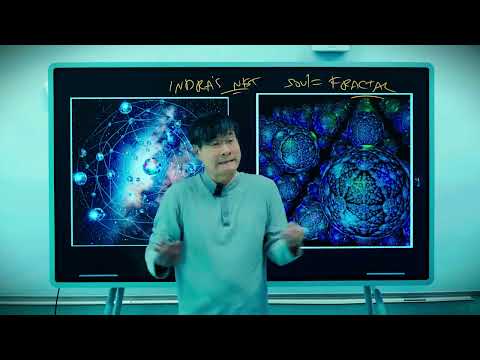
Dante's Revolution Against the Guide Who Obeys
The lecture begins with Augustine's dusty human nature and ends with Virgil fleeing the proof that Dante's love is stronger than obedience. Between those points: envy as a zero-sum illusion, the soul as a pearl in Indra's net, free will as restraint, and Statius as the disciple who breaks Virgil's map of salvation from inside.
Great Books #11: Dante's Revolution

Putin Does Not Want The Throne
The Beijing visit is only the front door. The lecture's real claim is that the China-Russia friendship is structurally thin, the dollar order behaves like an addiction, and Putin's strategy is to break American monetary demand without inheriting the burden of global empire.
Game Theory #27: Putin Enters the Chat

The Holy Empire of AI
The conspiracy story is false as history and true as prediction. Jiang's wager in this lecture is that the occult mythology around Templars, Freemasons, Marxism, Oracle, Palantir, and AI matters because it compresses a real pattern: elites keep rebuilding religion, technology, and political order into the same project of power, control, and perfected obedience.
Game Theory #26: The Holy Empire of AI

Trump in China as a Grand Bargain Engine
Jiang treats the Xi–Trump visit as a strategic theater. He argues the two sides are converging toward a broad U.S.-China deal over finance, energy, AI chips, and strategic geography, with payment in narrative control.
Game Theory #25: Trump Visits China

The AI Apocalypse: from Language Illusion to Control
The lecture starts by warning against overconfident certainty, then rewires from literary method to a hard model of AI: today’s systems are pattern-fitters optimized for compliance, so power becomes control over what counts as obvious and what can be seen.
Game Theory #24: The AI Apocalypse

The WWIII Chessboard: How Viewpoint Becomes Strategy
Jiang reframes the Iran-Israel-U.S.-Russia conflict as a long-horizon contest in worldview and political systems, where structural elites, narrative control, and religious grammar shape strategy more than leaders changing seats.
Game Theory #23: The WWIII Chessboard
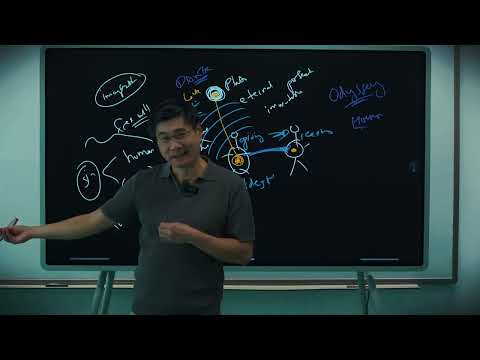
Hell Is the Imagination Turned Against Itself
Dante's hell is not only a place of punishment. It is what imagination becomes when love fails, when sin blocks self-forgiveness, and when betrayal trains the soul to see even love as food. The exit is stranger: Lucifer is a machine, Virgil may be part of the trap, and Cato stands at purgatory to show that real love cannot force another person to be saved.
Great Books #10: Dante's Hierarchy of Hell

The Population Becomes The Weapon
A source-grounded reading of the nation-state as war machine: Rousseau turns liberty into sovereignty, Fichte turns language into blood, Bismarck turns welfare into war infrastructure, Mussolini turns myth into death, and 21st-century war turns civilians against their own state.
Game Theory #22: Twilight of the Nation-State

World War Trump and the Fortress Empire
The ceasefire is surface noise. The real argument is that America can lose in Iran and still use the war to cut China's energy throat, turn allies into vassals, make the Western Hemisphere a fortress, and sell a world at war the dollars, weapons, energy, and surveillance needed to keep the machine running.
Game Theory #21: World War Trump

History As River, Prophecy As Plan
The midterm turns a ceasefire into a world model: history moves like a river, eschatology makes prophecy into a plan, and the people who survive collapse are not the ones with the best machines but the ones with story, community, will, and the courage to change their minds.
Game Theory #20: Mid-Term Examination

Dante, Virgil, and the World That Chooses Hell
A source-grounded reading of Dante as a dangerous poem: poetry enters memory like a virus, Virgil appears as guide and trap, and hell becomes the world people choose when obedience replaces love.
Great Books #9: Dante's La Commedia

Hollywood, War, and the Loss of Material Reality
A source-grounded reading of the episode's central claim: American war culture has learned to convert military failure into rescue spectacle, while real wars are still decided by economics, organization, logistics, and endurance.
Game Theory #19: The Hollywood-Pentagon Complex

Trump World Order and the Strategy of Controlled Collapse
A source-grounded reading of the lecture's central reversal: if Trump's goal is to preserve the old American empire, the Iran war looks insane. If the goal is to wreck that empire, force the world back onto North American resources, and build a continental fortress, the stupidity becomes a strategy.
Game Theory #18: Trump World Order

Collapse Is Engineered
The boom-bust cycle is stripped of innocence. Money is a collective hallucination, interest rates are commands to banks, and collapse happens when powerful actors can make more money by breaking the system than by letting it continue.
Game Theory #17: The Great Reset

War as a Four-Layer Game: Why Pax Judaica Keeps Appearing
This lecture turns a current conflict into a strategic exercise: the war is too short to be explained as U.S. versus Iran alone, because the deeper structure is a competition across narrative, political, economic, and military layers.
Game Theory #16: Pax Judaica Rising

The Poem That Makes a Robot
Virgil does not simply answer Homer. He builds an anti-Homer: a poem where love stops being the path to God, piety becomes obedience to empire, and education works by training the reader to abandon pity until the human being becomes a perfect soldier.
Great Books #8: The Poetry of Empire

The End of the End of History
Fukuyama's end of history becomes, in this lecture, a temporary American spell: Pax Americana, science-priesthood, and dollar worship. The Iran war breaks that spell. The next world is not cheaper, freer, and smoother; it is a test of resilience, food, water, religion, youth, and political flux.
Game Theory #15: The Return of History

The Nearest War Wins
The lecture names the law of proximity: people and nations play many games at once, but the nearest game is the one that governs action. The Iran war is therefore not only Iran versus Israel or America. It is American factions, Israeli factions, and Iranian factions using the outside war to fight the civil war closest to them.
Game Theory #14: The Law of Proximity

The Poem That Poisoned Homer
Rome cannot burn Homer, because Homer already lives in memory. So it builds an anti-Homer: a poem that keeps the old scenes but reverses their moral charge until love becomes hell, mercy becomes stupidity, and obedience to empire looks like heaven.
Great Books #7: The Anti-Homer

The Parasite Feeds on Reality
Jiang turns the Epstein files into a theory of war: social reality is a cave, the dollar is a consciousness trap, empire survives by looking invincible, and the exposed parasite network is already fighting its replacement.
Game Theory #13: Epstein's World

The War Runs on End-Times Scripts
Jiang makes the Iran war a test of religious prediction: if Al-Aqsa survives and peace arrives, his model fails. If the shrine falls, the deeper engine is not realpolitik but converging apocalypse scripts.
Game Theory #12: The Law of Eschatological Convergence

Love Is The Secret Language
The Odyssey ends by making love more important than empire, fame, and heroic death. Jiang reads Odysseus and Penelope as two people speaking in public and private at once, using brooch, bow, and bed to reunite mind, spirit, and soul.
Great Books #6: The Intimacy of Love

Control Beats Dominance
A source-grounded reading of Jiang’s law of escalation: the actor with the biggest weapon can still lose if the weaker actor has calibration, legitimacy, options, and a way to make the bully destroy himself.
Game Theory #11: The Law of Escalation

The Empire Loses By Winning
The law of asymmetry says the obvious winner may be the side structurally set up to lose. America has technology, propaganda, and money. Jiang reads those strengths as dependency, censorship, and bribery. Iran looks weaker, but pressure may turn it energetic, open, and cohesive. Then the lecture turns: maybe the real game is not territory or money at all, but consciousness.
Game Theory #10: The Law of Asymmetry

How Do You Go Home After Doing Evil?
The Odyssey is not a travel story first. It is the problem of a man whose war story has collapsed: justice became murder, family became destroyed families, and legacy became the shame he may leave his son.
Great Books #5: The Odyssey

The World Pivot Is A Strait
The war is not only missiles over Iran. It is a test of the system that makes Dubai feel safe, oil priceable in dollars, Europe dependent on Gulf energy, and American power look invincible. Jiang’s model is simple and brutal: a narrow strait holds the empire together, and water is where the map starts to tear.
Game Theory #9: The US-Iran War

Communism As Capitalism's Weapon
A source-grounded reading of Jiang's lecture on the false capitalism-communism dialectic: communism appears not as capitalism's opposite but as a weapon that clears away monarchy, religion, nationalism, democracy, and social democracy so capital can reorganize the world.
Game Theory #8: Communist Specter

The Iliad Puts a Universe in the Soul
The Iliad begins as a war of wills and ends as a metaphysics of love: memory is emotion, poetry is consciousness in motion, forgiveness defeats revenge, and forced perspective-switching becomes the big bang of civilization.
Great Books #4: The Conscious Universe

America Is A Game
A source-grounded reading of Jiang's lecture on America as the world game: Britain invents the imperial board but cannot scale it, the dollar turns wealth into an idea, the Constitution keeps the game above power, and the present becomes a reset over who controls the rules.
Game Theory #7: America's Game

The Bank That Made The Game
Chinese students are chasing English, dollars, and Western immigration because they are already inside a British-made world game. The road runs through spices, silver, piracy, Parliament, the Bank of England, offshore finance, elite schooling, money laundering, and the tragedy of a system that wins short term by poisoning everyone long term.
Game Theory #6: The World's Bank

The Poem That Gives Birth To Civilization
A source-grounded reading of Homer as civilizational engine: the Iliad trains Greeks to fight with speeches, poetry projects movies onto the world, language controls time and space, and the poet becomes the flame through which God makes reality speak.
Great Books #3: Poets and Prophets
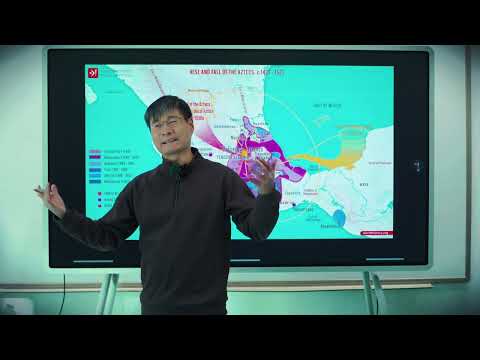
The Weakest Player Wins the World Game
A source-grounded reading of Jiang's World Game lecture: empires do not usually come from the obvious rich center. They come from marginal players forced into energy, openness, cohesion, cheating, begging, learning, and myth.
Game Theory #5: The World Game

The Immigration Game Is Rigged
A source-grounded reading of Jiang's lecture on immigration as a game: school success is not status, rule-following can become a trap, fertility and cohesion beat obedience, and America's open-society ideal begins as a settler and imperial rule system rather than a timeless moral law.
Game Theory #4: The Immigration Trap

Homer Makes Achilles Real Enough To Invent The Human
A source-grounded reading of the Iliad as self-recognition: Achilles becomes a mirror for humiliation and pride, Homeric speech tries to control reality, and the ancient poet becomes prophet and teacher because truth is beautiful, spaceless, and timeless.
Great Books #2: Homer and the Invention of the Human

The Marshmallow Was Always A Trust Test
A source-grounded reading of Jiang's lecture on success, class, parenting, schools, and revolution: self-control turns out to be trust, parenting turns out to be strategy, social mobility turns out to be governance, and revolution turns out to be a game reset.
Game Theory #3: Rich Dad, Poor Dad

School Sucks Because It Is a Game
School says it teaches literacy, competence, creativity, and lifelong learning. Jiang's answer is colder: the school that actually exists is a game built by parents, teachers, administrators, government, colleges, and students, and the winning moves are status, minimum effort, obedience, and avoiding exile.
Game Theory #2: Why Schools Suck

The Great Books and the Escape From the Dead Zombie World
A source-grounded reading of the Great Books as initiation: school materialism is named as the great lie, consciousness becomes the real substance of the universe, attention is true wealth, and reading becomes a way to resurrect Homer, Dante, and the whole spiritual world inside the student.
Great Books #1: Secrets of the Universe

The Dating Game That Eats Civilization
Game theory begins with a small dating game and ends with a civilizational forecast: when status becomes the prize, love, fertility, policy, and geopolitics all bend around the same zero-sum structure.
Game Theory #1: The Dating Game

The Apocalypse Needs A Headquarters
Truth is tested by narrative power. Eschatology becomes a coordination system. Jerusalem becomes the imagined headquarters. AI becomes the Mark of the Beast. The counterweight is long memory, Jewish resistance, collapse as rebirth, and a writer who refuses to rush the book that should outlive him.
Secret History #END: Pax Judaica

Modernity Needs A Scapegoat
A source-grounded reading of Jiang’s lecture on transnational capital, British sea empire, Frankist revolutionary theology, Disraeli’s Coningsby, Bolshevism, Marx, Bakunin, and Freud: modernity appears as a machine that hides capital, displays a scapegoat, turns truth into utility, turns objects into mirrors, and turns psychology into inward control.
Secret History #27: Empire of Evil

Sin Becomes A Technology Of Faith
A source-grounded reading of Jiang’s lecture on Jewish history, Sabbatai Zevi, and Jacob Frank: Jerusalem begins as an imperial hinge, exile becomes a crisis of faith, and Frankism turns sin, story, money, secrecy, and imagination into a method for conquering the world.
Secret History #26: Faith of Evil

Capital Steals Attention And Calls It Freedom
Capital is not a thing you own. It is a system that captures attention, manufactures anxiety, destroys stored security, and then moves somewhere else. Secret societies enter as the hidden trust machinery of capital that refuses place, nation, and responsibility.
Secret History #25: Capital of Evil

The Church Becomes the Empire Outside History
Rome fails to build a bureaucracy, Byzantium survives behind walls, and Western Europe is ruled by a stranger empire: a church that claims the sky, the soul, and the right to make impossible doctrine feel like reality.
Secret History #24: Empire of Church

Paul Turns the Divine Spark Into an Empire
Jesus arrives as a poor prophet of the inner spark; Paul turns that spark into belief, obedience, ritual, hierarchy, and a machine that can outlive Rome.
Secret History #23: The Organization of Evil

Jesus Is the Spark Rome Had to Kill
A source-grounded reading of Jiang's Jesus lecture: Christianity begins as a pile of impossible doctrines, the historical Jesus is thinner and stranger, the Gospel of Thomas makes him a poet-prophet of the divine spark, and Rome kills him because a slave who can forgive his enemy is no longer spiritually governable.
Secret History #22: The Divine Spark of Jesus

Rome Built an Empire by Turning Wounds Into Weapons
A source-grounded reading of Jiang's Roman lecture: Rome begins as a poor borderland war machine, invents a liberty of obedience, uses Greek historians and Augustan poets to launder violence, and reaches its deepest secret when trauma becomes a drug that turns guilt, hatred, and humiliation into conquest.
Secret History #21: Roman Anti-Civilization

The Borderland Becomes the Empire
A source-grounded reading of Jiang's Hellenistic World lecture: empire stabilizes itself into stagnation, borderlands beat it with energy and openness, Greece wins as a borderland, then becomes the empire whose universities, cities, and translations turn culture itself into rule.
Secret History #20: The Hellenistic World

The Bible as an Imperial Script
A source-grounded reading of Jiang's claim that Jewish identity is not treated here as simple continuity from ancient Israel, but as a Persian imperial construction: a Bible-shaped, temple-centered, purity-bound people made to stabilize and destabilize the Levant, then reused as a script by Britain, America, and Israel.
Secret History #19: Dawn of the Jews

Asha Is the Truth You Must Become
A source-grounded reading of Zarathustra as the prophet who turns truth into a life-practice: the universe is conscious, evil is the field where virtue becomes real, organized religion is the priestly capture of fire, and education is learning how to burn yourself into ashes so you can be born again.
Secret History #18: Thus Spoke Zarathustra

The Bible Turns Mistakes Into Imagination
A source-grounded reading of Literary Genesis: Israel begins as a political coalition, David needs legitimacy, and the Bible becomes the technology that turns propaganda into living memory. Its deepest lesson is not obedience. It is that mistake, debate, death, and story make creativity possible.
Secret History #17: Literary Genesis

Homer Made the Human Heart a Battlefield
A source-grounded reading of Jiang’s lecture on Homer as the big bang of Greek civilization: empire turns writing into control, the polis turns speech into civic training, and the Iliad turns war into the hardest human problem, forgiving the enemy because you first have to forgive yourself.
Secret History #16: The Big Bang of Greek Civilization

Capital, Collapse, and the Bronze Age Machine
Bronze begins as a weapon, becomes status, hardens into currency, and then teaches the world the dangerous rhythm of capital: rapid growth, total interconnection, elite consolidation, and sudden collapse.
Secret History #15: Capital and the Bronze Age Collapse

The Steppe Is the Training Ground of History
A source-grounded reading of Jiang’s lecture on why the so-called barbarians repeatedly defeat civilization: empires turn innovation into bureaucracy, while the steppe turns geography, animals, inheritance, oath, myth, and violence into mobile social power.
Secret History #14: Legacy of the Steppes

The Mandate of Heaven Is Written Propaganda
A source-grounded reading of Jiang's lecture on civilization as temple economy, writing as hierarchy machine, Enuma Elish as sky-god propaganda, Gilgamesh as bureaucratic literature, and grain as the crop kings prefer because free pastoralists are harder to rule.
Secret History #13: Mandate of Heaven

Heaven on Earth Is Built by Common Sacrifice
A source-grounded reading of Jiang's lecture on temples, pyramids, farming, ritual ecology, and the modern inability to build wonders: people once organized around heaven on earth; now the religion is capitalism.
Secret History #12: Heaven on Earth

Imagination Came Before Civilization
A source-grounded reading of Jiang's dawn-of-humanity lecture: Darwinism becomes a rival theology, cave art becomes a portal, speech begins as song, and modern society is accused of socializing people out of empathy.
Secret History #11: Dawn of the Human Imagination
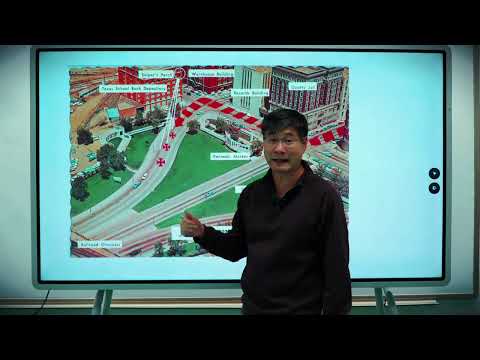
Conspiracy Is a War Over Reality
A source-grounded reading of Jiang's conspiracy lecture: Apollo, JFK, 9/11, Freemasonry, bureaucracy, and the number 33 become one model of spectacle, disclosure, guilt, and perception control.
Secret History #10: The Conspiracy of Evil

The Theory of Everything Is a War of Perception
A source-grounded reading of Jiang's attack on the scientific worldview: Big Bang, evolution, neuroscience, school, and transhumanism become parts of one material story that forgets divinity, fears death, and lets power reinvent reality.
Secret History #9: The Theory of Everything

Bureaucracy Makes Problems So It Can Sell Solutions
A source-grounded reading of bureaucracy as institutional death: university comfort replaces education, administrators turn complaints into jobs, managers feed on organizations like parasites, and the only exit left to students is real knowledge outside the credential machine.
Secret History #8: Death by Bureaucracy
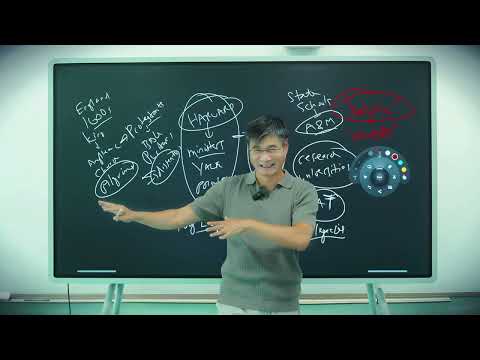
The Meritocracy Eats Its Children
The lecture turns meritocracy from a school virtue into a trauma machine: Harvard invents selection as power preservation, Yale trains insecurity as ambition, and the winners become actors who can promise goodness while serving the institution that made them.
Secret History #7: Death by Meritocracy
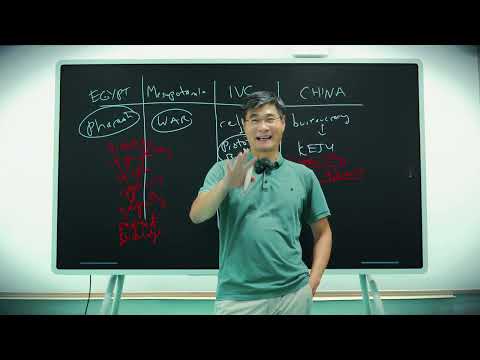
You Are Now The Pharaoh
The lecture turns evil into a technology of dissociation: ancient priests allegedly learn to split the pharaoh into identities, modern institutions learn to do it to everyone, and the hard refrain is that social control begins by deciding what a mind can experience as real.
Secret History #6: The Psychology of Evil (Graphic and Disturbing, Viewer Discretion Advised)
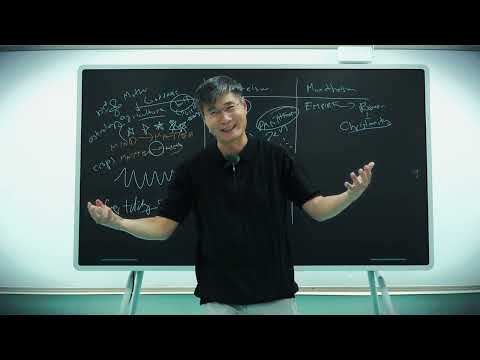
The False God And The Birth Of Evil
The lecture asks where secret societies come from and answers by rebuilding Western religion as a sequence of world models: womb, war, empire, false God, inner light, and poetry as an encoded map back to the Monad.
Secret History #5: The Birth of Evil

The Old Own The Future
Western decline looks like immigration crisis, unaffordable housing, assisted death, fake prosperity, debt, surveillance, and war. Jiang's wager is that these are not separate failures. Ask who benefits, and the answer is rich pensioners.
Secret History #3: Death by Gerontocracy
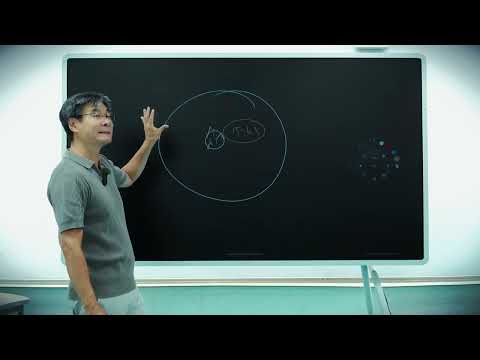
Taboo Is The River
The lecture asks how evil triumphs and answers with a disturbing mechanism: break the taboo publicly, remove retreat, and the group becomes one body. Then Jiang pushes the same mechanism through Monkey Island, Sparta, game theory, Kant, Hegel, Plato, and Dante.
Secret History #4: How Evil Triumphs

Collapse Is Sudden
Societies do not fall because one problem gets worse in a straight line. They fall when money outruns wealth, status has nowhere to go, cities dissolve trust into abstraction, and criticism becomes a crime just before the perfect storm arrives.
Secret History #2: How Societies Collapse

Power Is Alchemy
The first Secret History class starts with Kant and ends with alchemy. Reality is imagined, power controls the imagination, and the modern world is built from three impossible objects: money, the individual, and the nation-state. They feel real because power has made nothing into everything.
Secret History #1: How Power Works

The Old Sacrifice The Young
The lecture begins with Canada's immigration crisis and ends with a theory of Western collapse. The villain is not immigrants, a secret cabal, or one politician. The machinery is gerontocracy: a generation that wants pensions, healthcare, property wealth, and empire to survive long enough for them to die inside it.
Geo-Strategy Update #8: Why the West is Doomed

When Eschatologies Converge
The episode's pressure is not that religion sometimes decorates politics. It is that end-times stories can become scripts for coordination: they give people roles, tell them what catastrophe means, and make separate factions move toward the same Middle East furnace.
Geo-Strategy Update #7: When Eschatologies Converge

Putin As The Man Outside History
The episode begins with two escalations: Ukraine expands, Iran heats up. The puzzle is why American policy toward Russia keeps helping Putin. The answer Jiang tests is not merely strategy. It is a hypothesis about prophecy, Orthodox mysticism, Stalin, and a man who may be able to step outside history and bend it.
Geo-Strategy Update #6: Is Putin the Ubermensch?

Stories Win The Game
The episode starts with Iran and ends with Putin, but the real machinery is the formula between them: mass times energy times coordination. The winning group is not necessarily the richest or largest. It is the group whose story makes people move together without needing a meeting.
Geo-Strategy Update #5: The Universal Law of Game Theory
Newton's Divine Plan Runs Through The War
The quiet after the bombing is not peace. It is humiliation being stored. Iran's tepid response is read as a way to make its own population angrier, while the deeper machinery comes from Christian Zionism: a prophecy program that wants America removed, Israel enthroned, the Dome of the Rock destroyed, and the end of history forced into being.
Geo-Strategy Update #4: Newton's Divine Plan

The War Is Powered By Messianic Calling
After the ceasefire announcement, Jiang refuses to read the moment as peace. The ceasefire is narrative control. Iran, Trump, and Netanyahu all need to look forced or righteous, but the deeper engine is religious: each actor believes he is carrying a divine mission that turns danger into energy and war into salvation.
Geo-Strategy Update #3: The Messianic Calling

Escalation Dominance Becomes The Trap
On June 22, 2025, the morning after Trump orders strikes on three Iranian nuclear facilities, Jiang turns the Iran war into a three-player game. Iran, Israel, and Trump do not want the same world, but in his model they all want the same American mistake: ground troops in Iran.
Geo-Strategy Update #2: WWIII Begins, Let's Game Theory

The War America Can Win And Still Lose
On June 18, 2025, Jiang reads a possible U.S. war with Iran through the ruins of Iraq. Regime change is not a change of rulers; it is the destruction of a society's capacity to act as a people. Iran, he argues, is harder to break because it has geography, memory, civilizational identity, and more ways to impose pain.
Geo-Strategy Update: US-Iran War Incoming

Predictive History Begins As A School
Jiang explains the channel from the inside: a teacher leaving Beijing, watching Iran and Israel move toward world war, and trying to turn a student review archive into a new history that can explain the present and predict the future.
Civilization BONUS: Meet Professor Jiang

Stalin Warped History To His Will
The argument is not that Stalin was good. It is that Stalin was the rare political animal who could make impossible outcomes happen: a fringe party seizes Russia, an unimpressive Georgian outmaneuvers every Bolshevik intellectual, and a divided Soviet Union defeats Germany. The secret is not doctrine. It is the spy mind: masks, emotional intelligence, institutional violence, nationalism, and a willingness to sacrifice millions to force history into the one scenario where he wins.
Civilization #59: The Man of Steel

The Nation Is The New God
The nation-state is not just a map form. It is the most powerful ideology in human history because it solves a religious wound, protects bourgeois property, standardizes social life, mobilizes bodies for war, and turns culture into destiny. In the French version, the nation protects the citizen. In the German version, the nation is the church. The twentieth century is what happens when that church learns race, empire, eugenics, fascist myth, and total war.
Civilization #58: Birth of the Nation-State

Kill The Cult Of The Self
Freud is not introduced as a neutral founder of psychology. He is the hinge between Protestant anxiety, transgressive faith, modern art, social media, and a world that teaches people to worship the self until they cannot act together.
Civilization #57: How Modernism Ruined Everything

What Marx Got Right And Why Marx Got History Wrong
Marx is powerful because he sees what capitalism does to the soul. Marx is wrong because he thinks economics explains history. The deeper engine is religion, status, and the hunger for a world where suffering means something.
Civilization #56: What Marx Got Wrong

The Will That Survives the Destroyed City
Germany is not introduced as a defeated mistake. It is introduced as the civilization of unity of will: Prussia as creative military state, Konigsberg as destroyed intellectual heart, Wagner as music that collapses time, Nietzsche as desire turned into power, and Hitler as the catastrophic overman who made a nation feel like one will. The unresolved warning is Kaliningrad. You can destroy a city, but not the desire that city carried.
Civilization #54: The German Will to Power

Russia And The Mystery Of The Heart
The lecture starts with Putin and Ukraine, but it does not stay in policy. Russia becomes the civilization of the heart: fatalistic, wounded, merciful, violent, beautiful, and certain that reason alone cannot save anyone.
Civilization #53: Dostoevsky and the Soul of Russia

Empire Of Democracy
America begins here as a cure for civilization: a clean-slate game built from Enlightenment rights, self-help, property, and fair rules. Then the cure becomes empire. Lincoln fuses democracy and conquest. Tocqueville sees the cost: a world that is atomized, uniform, mediocre, and nostalgic for the civilization it tried to escape.
Civilization #52: Empire of Democracy

Shakespeare, The Language Engine Of Empire
English becomes empire because Shakespeare turns language into infrastructure. Words are not labels. They are soft power, music, memory, psychology, and a kind of surgery on the civilizational brain.
Civilization #51: Shakespeare's Language of Empire

The Island That Had To Innovate
Britain becomes empire not because it begins powerful, but because it begins divided, poor, exposed, and forced to change. Geography makes competition; invasion replaces elites; migration pushes people overseas. Out of that pressure come the navy, the bank, and the language.
Civilization #50: Rule, Britannia!

The Middle Class Learns To Stare At Its Own Anxiety
The Dutch Golden Age begins with a poisoned Spanish windfall and ends with Vermeer exposing cracks in the respectable household. In between, Jiang turns the middle class into a religious and psychological machine: wealth becomes proof of faith, art becomes a container for anxiety, and culture becomes a way to enjoy what it forbids.
Civilization #49: The Dutch Golden Age and the Rise of the Middle Class

The Empire of Myth
Napoleon looks like the genius of the French Revolution because he gives history its most cinematic image: speed, war, destiny, empire. The lecture reverses the picture. Robespierre creates the system; Napoleon creates the myth.
Civilization #48: Napoleon's Empire of Myth

Robespierre Becomes The Scapegoat
Robespierre is not read as a dictator who simply loses control. He is read as a prophet who acts out the Passion story inside a revolution that thinks it has rejected Christianity. The Reign of Terror releases polluted sacrificial energy; Robespierre purifies it by taking the guilt of the nation onto himself.
Civilization #47: The Passion of Robespierre

Reason Becomes A Religion
The French Revolution is not introduced as politics first. It is introduced as a religious mutation. Christianity is replaced by a modern faith in reason, debate, and progress; Rousseau becomes the poet of a new world; and the nation learns to inherit religion's power to make people die for what they love.
Civilization #46: The Revolution of Reason

Turn Society Into The Cannon
Gunpowder is not powerful because it makes a louder weapon. It is powerful because it demands a different civilization. To use it well, Europe has to centralize kings, tax peasants, build towns, empower merchants, train scientists, discipline children, and make the whole society serve war.
Civilization #45: The Gunpowder Revolution

Kill The God, Take The Empire
Disease, steel, horses, and divide-and-conquer matter. But the lecture's sharper claim is stranger: a civilization built around a sacred hierarchy becomes conquerable when outsiders are willing to violate the taboo that holds the game together. The Spanish kill the god-king, inherit the sacred role, and turn worldview collapse into empire.
Civilization #44: The Spanish Conquest of the New World

The Bureaucracy That Forgot How To Discover
Science begins here as a theological discipline of doubt. Dante makes imagination a duty. Monotheism makes the universe intelligible. Bacon turns doubt into an institution. Then the institution grows so powerful that it can no longer welcome Galileo, Newton, or Einstein.
Civilization #43: The Structure of Scientific Revolutions

The Iron Cage Of Protestant Anxiety
The Protestant Reformation begins as liberation from priest, pope, and ritual. In this lecture, that liberation creates a new terror: direct access to God means direct exposure to uncertainty. Money solves the terror by becoming a symbol of God, proof of grace, and finally the machinery of capitalism.
Civilization #42: The Protestant Reformation and the Birth of Capitalism

Dante's Quiet Revolution
The Renaissance is not only money, trade, city-states, books, and paintings. Those conditions are tinder. Dante is the spark. By turning God from master into love, and humans from slaves into imaginative beings, poetry quietly plants modernity inside the Church itself.
Civilization #41: Dante's Quiet Revolution

The Church That Demanded Your Soul
The Crusades are not explained by zeal alone. A church built on humility and poverty becomes the richest institution in Europe, then has to defend the authority that made it rich. Its answer is a system: control the afterlife, enforce right thinking, scapegoat the vulnerable, and turn religious energy into holy war.
Civilization #40: Church and Empire

The World Shatterer
Genghis Khan is not explained by saying the Mongols were uniquely evil. The harder claim is that they turned every constraint of steppe life into strategy: speed, terror, escalation, and a reputation so dark that surrender became rational.
Civilization #39: Genghis Khan, World Shatterer

The Bureaucracy That Ate China
China had the technologies that made modernity possible, then built a political culture that made those technologies inert. The center wanted unity more than wealth, stability more than invention, and an exam system that looked fair only until fairness threatened power.
Civilization #38: Twilight of the Middle Kingdom

Islam As Proto-Modernity
The easy story says modernity begins in Europe after a medieval interruption. This lecture reverses that. Islam is not the interruption. It is the first great machine that makes God concrete, knowledge portable, trade global, science intuitive, and Europe modern.
Civilization #37: The Golden Age of Islam

The Viking Memory Machine
The Vikings do not look important because they left fewer books. That is the modern prejudice. The lecture's answer is that oral culture was not a failure to become literary. It was a different machine for producing memory, courage, loyalty, imagination, and people who could act stories into the world.
Civilization #36: Memory of the Norse

The Fifth Pillar of the West
The Vikings are not just raiders with boats. They are the missing fifth pillar of the West: a poor, egalitarian, opportunistic borderland culture whose ships, stories, funerals, slave routes, monastery raids, intermarriages, and conversions helped make Britain, France, Germany, and Russia thinkable.
Civilization #35: The Viking Legacy

The Useful Fiction That Made Europe Governable
The Holy Roman Empire was not holy, not Roman, and not much of an empire. That is why it mattered. In a continent too fractured to conquer cleanly, fiction did the work force could not: it made kings legitimate, gave the church imperial reach, and let Europe pretend at unity while remaining full of local power.
Civilization #34: The Useful Fiction of the Holy Roman Empire

The Empire That Swallowed Its Geniuses
Byzantium survives for a thousand years because it solves Rome's political problem. It declines because the same solution turns culture into administration. The genius who might have become Homer or Dante becomes a bureaucrat.
Civilization #33: The Rise and Fall of the Byzantine Empire
The Oceanic Currents Of History
History is not a cycle, and it is not a line moving politely toward truth. It is an ocean. Empires expand like currents, energize their borderlands, and eventually produce hurricanes that cannot be negotiated with.
Civilization #31: The Oceanic Currents of History

Dante Performs Surgery On Virgil
The Divine Comedy does not defeat Virgil by denouncing him. It makes him the guide, father, and hero, then quietly teaches the reader that the trusted guide would rather return to hell than admit he is wrong.
Civilization #30: Dante as the Second Coming of Homer

Dante's Jigsaw Puzzle Of Love And God
Dante is not only a poet of heaven and hell. In Jiang's reading, The Divine Comedy is an intellectual jigsaw puzzle that changes the mind, rebuts Augustine's hatred of body and will, makes doubt divine, and ends with the claim that love and imagination continue God's creation.
Civilization #29: Dante's Divine Comedy and the Liberation of the Human Imagination

Muhammad As The First Global Revolutionary
A source-grounded reading of Islam's rise as Jiang's first global revolution: a thin archive, a Moses-like prophet, a desert mistaken for backwardness, and a movement that fused religious devotion with revolt against debt, landlessness, persecution, tyrants, and landlords.
Civilization #28: Muhammad's Revolution of God

Augustine Takes The Church Out Of History
A source-grounded reading of Augustine as empire's theologian: the Church escapes history, curiosity becomes sin, love becomes disease, passivity becomes goodness, and Arabia appears as the next place where fugitives from authority will prepare Islam's challenge.
Civilization #27: Augustine's Empire of God

The Godhead Equation That Made Money Real
Christianity wins twice in this lecture: first as a Roman-compatible institution, then as a strange formula that trains people to treat symbols as reality. Once God is nowhere and everywhere, money, science, and the nation state can become the world we live inside.
Civilization #26: Constantine's Monotheistic Revolution

Paul, Rome, and the Invention of Christianity About Jesus
Jesus teaches a kingdom within. Paul builds a religion about Jesus that can move through the Roman world. The lecture asks whether that transformation was holy organization, opportunism, or a strategy for making Jewish faith compatible with empire.
Civilization #25: Paul of Tarsus, Messiah of Rome

Cyrus Makes Mercy Into Empire
A source-grounded reading of Cyrus as the foreign messiah: exile hardens Israelite memory, Persian mercy becomes a strategy of rule, Zoroastrianism turns administration into cosmic truth, and Ezra's purity project prepares the religious machinery Christianity will inherit.
Civilization #23: Cyrus the Great as Messiah

The Bible Is Not Chronology, It Is Cosmology
A source-grounded reading of the lecture's central argument: the Hebrew Bible becomes world-shaping not because it records early history, but because David's political project finds a poet-god, a poet-king, and a Yahwist whose few words make God fallible, faith argumentative, and family drama infinite.
Civilization #22: The Literary Genesis of the Yahwist

David's Apology Turns Murder Into Scripture
The Bible begins, in this lecture's argument, as political spin for David: a library of collective imagination that turns usurpation, murder, and fear of rivals into legitimacy, identity, and eventually literature.
Civilization #21: The Apology of King David of Israel

The Lost Trade Civilization Behind Buddhism
A source-grounded reading of the episode's central claim: the Indus Valley was a peaceful trade civilization whose lost religion may survive as the Indian nostalgia for oneness, false reality, and liberation without the gatekeeper.
Civilization #20: The Proto-Buddhists of the Indus Valley (Harappan) Civilization

Gilgamesh Against the Pyramid
Mesopotamia turns geography into mythology: where Egypt imagines divine generosity and pyramidal immortality, the land between two uncooperative rivers learns struggle, creative destruction, and the more fragile immortality of being remembered by the people who live because of you.
Civilization #19: Gilgamesh and Mesopotamia's Quest for Immortality

The Pyramid That Tried To End History
A source-grounded reading of the Great Pyramid as Egypt's Manhattan Project: a divine battery, a state economy, and a wager that a sacred body could control the Nile, unify Egypt, and make peace eternal.
Civilization #18: The Great Pyramid as Ancient Egypt's Manhattan Project

Rome's War To Defeat Homer
Augustus cannot rule Rome by armies alone. He has to replace Homeric love and imagination with Virgilian piety, obedience, and the imperial claim that history ends in Rome.
Civilization #17: Homer, Vergil, and the War for the Soul of Rome

Caesar's Death Made Octavian Emperor
Rome does not hand Octavian power because he is the best general, the most charismatic speaker, or the obvious heir. Caesar's will and Caesar's murder turn doubt into guilt, make Octavian the new Julius Caesar, and let a republic trained to fear kings accept a ruler more powerful than one.
Civilization #16: Julius Caesar's Will and Octavian's Birth of Empire

Caesar Changed Rome's Reality, So Rome Killed Him
Julius Caesar was not only a general or politician. He was a myth maker: a man who turned himself into the protagonist of a new Roman story, built a reality of Caesar as great conqueror, and frightened the old republic because people like Caesar were not supposed to exist.
Civilization #15: The Myth-Making Genius of Julius Caesar

Rome's Cult Of No Surrender
Hannibal can destroy an army, but he cannot make Rome accept defeat. The lecture's answer is that Rome is not just a state with soldiers. It is a war machine whose history became religion, whose liberty means obedience to law and institution, and whose devotion means all or nothing.
Civilization #14: Hannibal Barca, Lucius Brutus, and the Triumph of Rome

Aristotle, The Censor Who Made Greece Portable
Aristotle is not treated here as the solitary genius behind Western reason. He is the paradoxical editor of empire: the textless philosopher whose system made Greek identity teachable, portable, and useful after Macedonian conquest.
Civilization #13: Aristotle and the Greek Legacy

Alexander Under the Father's Shadow
A source-grounded reading of Alexander as the inheriting son: expansionist, obedience-hungry, and unable to hear correction except as betrayal.
Civilization #12: The Tyranny of Alexander the Great

Philip Built The Machine Alexander Rode
Greek culture did not spread because everyone recognized its beauty. It spread by conquest. The lecture's sharper claim is that Alexander's conquest was made possible by Philip: the father who turned poor, weak, divided Macedon into a disciplined machine.
Civilization #11: The Greatness of Philip II of Macedon

The Cave That Makes Socrates A Martyr
A source-grounded reading of the lecture's central turn: Socrates attacks democracy by exposing the weakness of language and reason, then Plato rescues Socrates by turning the cave into a martyr story, a Christian universe, and a politics of philosopher kings.
Civilization #10: The Trial of Socrates and Plato's Allegory of the Cave

Tragedy Makes Democracy Face Itself
Aeschylus gives voters the power of gods. Sophocles shows why kings do stupid things when power breeds hubris. Euripides turns imperial glory into a mother holding her son's head and asks democracy to look in the mirror.
Civilization #9: Aeschylus, Sophocles, and Euripides as Prophets of Democracy

Rat Utopia And The War That Preserved Status
Greek history begins with geography, but it ends here as a theory of abundance, blocked status, and pointless war: when the line stops moving, the young do not overthrow the old order directly. They are sent to kill each other.
Civilization #8: Rat Utopia and the Peloponnesian War

Destruction, Homer, and the Birth of the Human
Greek civilization begins as a reversal: chaos, illiteracy, and poverty force the polis, the alphabet, and Homer, until poetry teaches a new human being how to see, feel, and think.
Civilization #7: Homer's Iliad and the Birth of Greek Civilization
Too Many Rich People, Too Little Power
The Bronze Age Collapse is not treated as a freak disaster. It becomes the recurring pattern of elite society: bronze is oil, Troy is the toll gate, rent becomes debt slavery, capital becomes fiction, and civilizations fall when too many elites fight for too little power.
Civilization #6: Elite Overproduction and the Bronze Age Collapse

How the Yamnaya Made War, Money, and the West
Old Europe begins as a Mother Goddess world of agriculture, unity, women, peace, and art. The steppes produce another logic: open competition, cattle wealth, horses, private property, patriarchy, plague, and conquest. That is how a grassland culture becomes the origin story of the West.
Civilization #5: The Yamnaya Conquest of Europe

The Civilization That Chose Not To Make War
Gimbutas's Old Europe becomes Jiang's Paradise Lost: a Mother Goddess civilization where art, writing, sexual agency, and nonviolent social control show that war, property, and patriarchy are historical arrivals, not human nature.
Civilization #4: The Paradise Lost of Marija Gimbutas

The World More Real Than Reality
For most of human history, Jiang argues, humans were peaceful, egalitarian, and artistic because the forest, animals, ancestors, and spirit world were not scenery. They were the real world, and ritual was how humans kept that world awake.
Civilization #3: The Religious Imagination

Humans Are Religious Before They Are Economic
Cave paintings are not just art on stone. They are religion before doctrine, society before agriculture, and the first evidence that human beings need a shared world before they can build one.
Civilization #2: Religion and the Dawn of Society

Farming Won Because It Carried Religion
A source-grounded reading of the lecture's central reversal: agriculture was not an obvious leap into progress. Hunter-gathering was easier, farming was a bad bargain, and people accepted settlement because religion made one place meaningful enough to stay.
Civilization #1: Explaining Humanity's Transition to Agriculture

The Future Is What You Make Happen
The final class turns collapse into an assignment: build a democratic psychohistory that can model war, correct history, answer great-man edge cases, and still preserve the human heart that wants to love, create, learn, and grow.
Geo-Strategy END: Psychohistory (The Science of Imagining the Future)

America Resolves Conflicts Through Violence
A June 2024 lecture arguing that the next American civil war will not repeat 1861. It will emerge from a country where violence is sacred, shared narratives have collapsed, institutions no longer arbitrate conflict, Trump turns hatred into power, and a foreign war with Iran could fuse empire to domestic rupture.
Geo-Strategy #11: The Second American Civil War

How Strategic Imagination Turns Empire Against Itself
Putin does not have to defeat America frontally. He has to make American hubris fight too many wars, make debt look fragile, make national myths crack, and use Ukraine as a black hole for NATO until the paper tiger spends itself blind.
Geo-Strategy #10: Putin's Strategic Imagination

Putinism Is Continuous War
War is a workout for society. In this lecture, Putin's war is read as an attempt to cure a consumer, alcoholic, shrinking Russia by turning it into a warrior civilization, and the cure carries its own contradiction.
Geo-Strategy #9: Putin's War for the Soul of Russia

The Iran Trap Turns Invasion Into Hostages
A source-grounded reading of the lecture's central claim: the Iran war that looks like American domination is the moment the United States becomes trapped, because geography, supply, domestic politics, sunk cost, and nuclear deterrence turn an invasion force into hostages.
Geo-Strategy #8: The Iran Trap

Raisi's Death and the Beneficiary Test
A source-grounded reading of the lecture's central move: the crash was probably an accident, but if it was not, Jiang asks who had opportunity, motive, and the most to gain.
Geo-Strategy #7: Who Killed Iranian President Ebrahim Raisi?

Shock and Awe Made Empire Feel Like a Game
A source-grounded reading of the lecture's central claim: America mistook Iraq's one-off success for a universal doctrine, built an empire without guilt through hidden special forces, and now carries that hubris toward Iran.
Geo-Strategy #6: America's Imperial Hubris

The Haley Bet as Political Theater
A dated May 2024 election model: Biden's 2020 coalition weakens, the suburbs become the hinge, and Trump can win by turning Nikki Haley from enemy into evidence that he has changed.
Geo-Strategy #5: Why Trump Will Win (And Pick Nikki Haley as VP)

Saudi Arabia Needed America To Fight Iran
A source-grounded reading of the episode's central claim: Saudi Arabia's rivalry with Iran moved from religion and oil into proxy war, exposed the kingdom's fragile infrastructure, and made a Trump-led America the weapon Saudi Arabia could not supply for itself.
Geo-Strategy #4: Saudi Arabia's Trump Card Against Iran

Christian Zionism Turns War Into Prophecy
A source-grounded reading of the lecture's central claim: the coming U.S.-Iran conflict is not only empire and alliance pressure. It is also a religious worldview in which Israel becomes the stage for prophecy, war becomes a desired trigger, and hopeless people are offered a free lottery ticket to a new world.
Geo-Strategy#2: Christian Zionism and the Middle East Conflict

Military Dominance Is Not Victory
Iran's missile strike is read not as a failed attack, but as a demonstration of asymmetrical strategy: choose the battlefield, satisfy four goals at once, and make the dominant power fight on terms it does not understand.
Geo-Strategy #1: Iran's Strategy Matrix

The Talese Method Turns Listening Into Research
A source-grounded reading of literary journalism as a two-part discipline: exploration begins when a researcher can listen until a stranger becomes a friend; reflection begins when craft becomes patient pursuit of perfection.
Jiang Xueqin Teaching Gay Talese Research Method (Introduction)
No matching episodes. Try a broader term.